Director: Yorgos Lanthimos
Runtime: 118 minutes
Without any notable visual flourishes, The Lobster does what so many films set in the near (or far) future fail to do even with massive budgets: create an instantly convincing, wholly immersive world. Greek director Yorgos Lanthimos (Dogtooth), making his English language debut, has outdone himself with his break from his homeland and native tongue. Absurd, strange, blackly funny, and even oddly touching, The Lobster will most certainly be an acquired taste. Those who can get on Lanthimos' wavelength, however, are in for one hell of a treat as the film makes the rounds at festivals ahead of its currently TBD American release next year.
The end of a relationship, especially one that lasts for more than a decade, is always painful. But there isn't much time to wallow in newfound loneliness in the world of The Lobster, as we quickly learn from following newly single David (Colin Farrell, heavily de-glammed). In accordance with current government laws (setting is undefined, though signs point to French Canadian territory), David is carted off to a sleek countryside resort, where he will be given 45 days to find a new mate. If he fails, he will be turned into an animal, albeit one of his choosing (in David's case: the film's titular crustacean).
Unfolding with a level of deadpan that would make Wes Anderson envious, The Lobster's chief strength, among many, is how maintains its tricky tone over the course of two taut hours. From a pacing standpoint, this is easily the most polished of Lanthimos' films, which prevents one from falling out of touch with the uncompromising idiosyncrasies. The Lobster's second half breaks the narrative out of a delightfully repetitive cycle, yet manages to maintain and build upon the successes of the beginning. Just when you think that Lanthimos is getting too lost in his own vision, Yorgos Mavropsaridis' editing keeps things moving with laser-cutter precision, all without disrupting the deliberate flow of the story. All other technical aspects are similarly excellent, especially the green and beige-hued photography of Thimios Bakatakis and the discordant soundtrack that mixes pop songs with jolting string pieces.
Lanthimos reigns all of this in beautifully from the director's chair, with plenty of crisply-assembled passages composed of stealthily compelling shots with little or no camera movement. For as much time as the film spends at the singles' resort/internment camp, Lanthimos always finds new visual alleys to drag one further down the rabbit hole. Even the most mundane hotel hallway comes loaded with bizarro uncertainty in the world of The Lobster, which prides itself on subverting the ordinary by underlining it with hints of ludicrous, yet somehow plausible, extremism. In Woody Allen's Crimes & Misdemeanors, Alan Alda's character quoted Larry Gelbart's, "if it bends, it's funny; if it breaks it's not funny" remark, and that manifesto is certainly true here. Lanthimos bends The Lobster to its absolute further, keeping it on the precipice of breaking without ever going too far.
Yet for all of The Lobster's understated work in the arts/tech departments, Lanthimos' script ultimately holds the key to the aforementioned control of tone. The Lobster could have easily become a one-note joke, but Lanthimos and co-writer Efthymis Filippou dole out the bizarro details of the film's setting in carefully constructed vignettes that gradually coalesce into a spectacular whole. Some are strange, some are disturbing, and some are gut-bustingly funny in their deliberate emotional vacancy. Few scenes capture the whole of The Lobster quite like the one wherein the hotel manager (a pitch-perfect Olivia Colman) and her husband try to serenade the horde of single folk with listless performances of romantic songs and robotic dance moves.
And as much as I lit up every time Colman appeared, the rest of the cast are all a treat to watch as well. Farrell continues to excel when given darker, off beat material, and while 'David' doesn't allow him the range of In Bruges, it demonstrates his skill as a versatile actor who should never have been propped up as a traditional leading man. Other hotel residents are marvelously filled out by the likes of Ben Whishaw, John C. Reilly, Extras's Ashley Jensen, and frequent Lanthimos collaborator Angeliki Papoulia (as an ice cold "hunter" who delivers the film's darkest joke). Later arrivals like Lea Seydoux and Rachel Weisz (the latter of whom narrates the film throughout) are welcome presences as well.
However, these characters are ultimately pawns in Lanthimos' oddball experiment. In some ways, he's taking a page from the Coen brothers, playing a narrative god with a merciless combination of dark humor and irony. But even when the ambiguous ending arrives (he's a fan of those), Lanthimos refuses to let his detachment from his characters slip into cruelty. The characters may do horrible things (or have horrible reactions), but in the film's later stages Lanthimos subtly shifts into empathy without puncturing the carefully crafted tone and losing all thematic control. Like another film set to play at AFI Fest (Todd Haynes' Carol), The Lobster possesses an unwavering dedication to a strict code of tone and atmosphere that will strike many as redundant and exhausting. Yet for others, the relentless unwillingness to make major changes will become its main selling point, highlighting, for better or for worse, the purposeful vision at the helm.
Grade: A
Director: Sam Mendes
Runtime: 143 minutes
One of the main complaints against the Daniel Craig 007 films is that, well, they don't really feel like 007 films. Starting in the early/mid 2000s, grittiness has become the defining trait of most action films (especially those involving superheroes). Christopher Nolan's Dark Knight trilogy best exemplifies this. The operatic darkness Nolan brought to the world of Bruce Wayne and the Joker made for a satisfying contrast to the campy Batman films of years past. Yet unlike Batman, 007 has always been a character built on charisma and suave sexuality. And yet Casino Royale and Quantum of Solace both turned Bond into a more restrained, Jason Bourne-type action hero. Even the villains were tame, with the most outlandish character trait being a bleeding eye. What makes Skyfall, Craig's third outing as 007, stand out is that it takes still takes the dark and gritty approach to Bond, yet mixes in elements that seem to put the secret agent on path to being something resembling his former self.
Opening with a superbly executed chase in Istanbul, Skyfall is perhaps the most intimate Bond film yet. A secret from M's (Judi Dench) past has come out from hiding, launching a vicious cyber battle against MI6 and its agents. After MI6's headquarters are badly damaged, Bond and his cohorts find themselves using limited means. When Bond first meets Q (Ben Whishaw), he is only given a DNA-encoded gun, and a radio transmitter. Casino Royale may have been the stylistic reboot of the Bond films, but Skyfall truly takes 007 back to basics. Even the locations are scaled down. Bond's globetrotting is all contained in the film's first half, with the only significant trip after Istanbul being Shanghai/Macau. Once back on the British mainland, the film settles in and gets cozier and cozier, eventually leading Bond to the remote Scottish Highlands.
It's an interesting story choice, and it pays off by giving the film a sense of focus, despite its 2 hr 20 min duration. Complimenting this is Sam Mendes' direction. The closest thing to an "art house" director to ever helm a Bond film, the choice pays off in spades. More than any Bond film in recent (or distant) memory, Skyfall is built on a sustained atmosphere, rather than on broad humor and over-the-top action. Aside from the opening and closing battles, the film's action feels relatively contained, save for a bit in the London Underground that is left hanging in thin air.
In large part, the credit also belongs to cinematographer Roger Deakins, who has created the best looking Bond film ever, by a considerable margin. The master DP's work here, from the foggy Scottish hills to the neon and steel of Shanghai is lush, textured, and varied. A sequence set in a room full of glass doors and panels is a masterwork of playing with light, lines, and reflections. It's a sumptuous film, and the visual pleasures help smooth out the occasional odd or underwhelming moment (a scene involving a hungry Komodo dragon is particularly shrug-inducing).
The cast are also on their game as well. Craig seems to be having a little more fun as Bond, especially now that his turmoil regarding Vesper Lynd's death has been resolved. Judi Dench, who winds up being the film's true "Bond girl," turns in strong work as well, as she tries to keep up a steely front while her past wreaks havoc on her world. The scene stealer, however, is a lip-smackingly evil Javier Bardem as Silva. His introduction, a lengthy back-and-forth with Bond in a cavernous room, is a nifty mix of Bond villains old and new. Menacing, but also somewhat flirty and campy, Bardem is Skyfall's spark, even if his later material is somewhat generic and prevents him from becoming iconic. By tying the villain's motives directly to major characters of the Bond universe, Silva lends Skyfall an old-fashioned glossy appeal. Coupled with some references to characters and objects from the previous Bonds, and you have a film that mixes modern gritty action stylings with some good old retro fun.
And even though the film ventures into some dark places, its conclusion gives rise to the hope that emotionally lighter days may be in Bond's future. Though less expansive than some previous films in the franchise, Skyfall's smaller focus is handled in such a way that it still feels epic. The cast is strong, the direction is elegant, and the atmosphere, mostly through the visuals, is all first rate. Even when a particular scene ends on an iffy note, the film immediately recovers with some new intriguing sequence of beautiful visual composition. In a sense, Skyfall is the most complete Bond film to date. It represents a marriage of Bond's past and present, and combines the two to pave the way for more complex, but also more fun, films to come.
Grade: B/B+
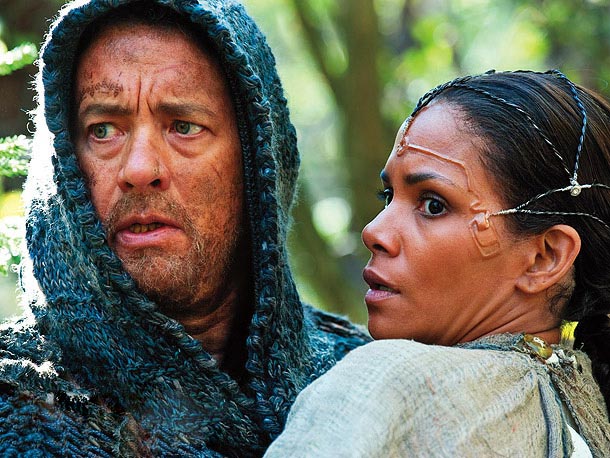
Director(s): Andy & Lana Wachowski, Tom Tykwer
Runtime: 172 minutes
In an age when Hollywood has become increasingly prone to loud, mindless blockbusters and endless sequels, you have to admire the amount of faith that went into Cloud Atlas. Based on David Mitchell's acclaimed novel, this massive (in scope and in length) adaptation is the sort of ambition Hollywood ought to aspire to more often. Even if, as is the case here, the final product is neither a mind-blowing masterwork or a total train wreck but rather a well told story that works better narratively than emotionally.
As far as plot is concerned, Cloud Atlas has plenty, though it ultimately boils down to six main threads. Among them are a journalist's investigation of a shady nuclear power plant, a young musician's relationship with a famous composer, and a clone in the far future who gets dragged into a rebellion. How these, and other, stories link together is a matter of echoing dialogue, images, and sounds. Oh, and there are also very literal links as well. Whereas Mitchell's novel unfolded as a nesting egg of sorts, directors Tom Tyker and Andy and Lana Wachowski (the newly monikered Wachowski Starship) have strung the six major segments together as simultaneous narratives.
And, on the filmmaking level, it's impossible to deny the effort that the directing trio went through in order to bring Mitchell's novel to life. Each segment is well told, and though the genres range from sci-fi adventure to goofy comedy, they are strung together with such smart organization that changes from story to story are rarely, if ever, off-putting. Above all else, the true hero of Cloud Atlas isn't one of its dozens of characters, but rather editor Alexander Berner. The task before him had to be nothing short of monumental, yet he has turned the massive collaboration into a fluidly organized film, that not only runs upwards of three hours, but also tells some of its individual stories out of order.
Berner aside, technical prowess abounds in the film. Costumes and set design nicely recreate past worlds while also birthing new ones, while the cinematography captures each genre with lighting to match. There's also the quietly building score, courtesy of Tykwer, Johnny Klimek, and Reinhold Heil. Like some of the collaborations between Kieslowski and Preisner in the late 80s and early 90s, some of the music plays a major plot point across narratives, and this composing trio have crafted a nicely affecting set of recurring musical themes that carry the massive narrative with grace, rather than with overcompensation.
Of course, there's also the make-up. Many an actor has transformed him/herself with make-up and prosthetics, but never like Cloud Atlas. Every major player in the ensemble undergoes radical transformations across segments that include changes in race and gender. Part of the fun of the experience is figuring out who's who. Whether or not Cloud Atlas succeeds in being mindblowing as a whole is debatable but I'd be hard-pressed to find someone not won over by the extraordinary efforts of the hair and make-up teams.
Before I forget, however, there are actually people doing interesting things infront of the camera as well. Though some members of the ensemble are more prominent than others (Susan Sarandon feels largely underused), the cast is generally a marvel. No individual flies far ahead, but the performances all register nicely. Near the top of the crowd are Doona Bae, most prominently featured as a clone named Sonmi-451, and Ben Whishaw, best utilized as a struggling gay composer. Tom Hanks also surprises, in roles that range from cartoonishly evil to tenderly sincere. With so much ground to cover, the performers have few notes to play, though they hit them more often than they miss.
But looming larger than any character (or prosthetic nose) are Cloud Atlas's ideas. The idea that "everything is connected" has certainly be done before on film, but perhaps never on such a ludicrously large scale. To meld time periods and genres in pursuit of grandiose New Age wonderings is the sort of philosophical undertaking that could easily sink a film. How well it succeeds is somewhat difficult to describe. The connections between and among segments are often beautifully handled, never spelling things out so much as finding elegant and entertaining links to and from the various stories. Though separated by decades and centuries, part of what works in the film is that the connections evolve and deepen as time progresses. If Mitchell's novel was set up as a Russian nesting doll, then this adaptation is more akin to a very large jigsaw puzzle.
The inevitable drawback, however, is that with so much work put into simply telling the stories, there isn't quite enough room for the film to come together at the end. Each story has its own progression and arc. Each story has heroes and villains. But even as the pacing escalates up and down throughout the final hour, Cloud Atlas ends more with a whimper than with a bang. Moments that could elicit either immense awe or deeply felt sadness instead connect on a much more shallow level. Plot and construction are a critical part of the story's overarching themes, but in the transference to the big screen, the human element hasn't translated as fully.
The most immediate comparison I can make is Darren Aronofsky's The Fountain (2006). Despite being half the length (and also containing only three story strands), it's an equally ambitious film. And despite the differences in length and number of characters, both films work on certain levels, but are held back by certain deficiencies. For Aronofsky's film, it was the narrative and thematic elements that felt incomlpete, whereas in Cloud Atlas, it's the characters. Both weaknesses prevent the films, despite their strengths, from reaching their (insanely high) potential.
I have no doubt that many will disagree. Like The Fountain, Cloud Atlas is likely to be the love it/hate it film of its year. Yet once again I find myself in the curiously small middle ground. I merely liked and admired what the Wachowski's and Tykwer created. At the very least they succeeding in telling six engrossing stories - non-sequentially, mind you - over the course of three hours. In an age where big studio projects are built increasingly to move fast, be simple, and make money, Cloud Atlas is something of a relief. As A.O. Scott of The New York Times put it in his review, this is "the most movie" you can get for your eight (ten? twenty?) bucks. Yet considering how much "movie" I got from Cloud Atlas, it's hard not to be left a little wanting. That this film exists is something of a miracle in this day and age. A shame that it exists and only partially succeeds in reaching its lofty goals, which are left floating somewhere up in the stratosphere.
Grade: B