Director: JJ Abrams
Runtime: 132 minutes
The fun of a sequel (at least on paper) is that the groundwork for the characters has already been established. This allows future installments to hit the ground running, and build up bigger, more epic plots that can produce thrills on a grander scale. The most obvious recent example of this trend is Christopher Nolan's The Dark Knight, which took the foundation of Batman Begins and introduced a darker, larger narrative, along with a more potent villain and higher stakes.
JJ Abrams, on the other hand, has opted for an oddity of a sequel in his reboot of the Star Trek film franchise. Like its predecessor, Star Trek: Into Darkness has slick visuals, a good sense of humor, and fun set pieces. It also boasts a more enjoyable and menacing villain. On the other hand, Abrams' film feels strangely limited in scope, due to the script's initially choppy plotting. Overall, Into Darkness is a solid follow-up to Abrams' 09 film, yet it can't help but feel like a step in the wrong direction when it comes to narrative ambition.
Thankfully, the lighthearted opening sequence quickly re-establishes the best traits of the last film. The thrills are there, and, more importantly, so are the laughs. Though certain returning characters get little to work with (including Zoe Saldana's Uhura), the dynamics across the ensemble are still handled with a swift effortlessness. As the film's co-leads, Chris Pine and Zachary Quinto continue to delight. Their chemistry has remained firmly intact, and it's capable of infusing even the darkest moments with flashes of wit. Yet where Quinto was quite easily the MVP in the previous film, it's Pine who's the real surprise this time around. Kirk's existential conflicts aren't as inherently as interesting as Spock's, yet the way the script pushes the character (and the actor playing him) to his emotional limits is a tremendous boon. Of the returning supporting players, Karl Urban and Simon Pegg continue to have a ball as Bones and Scotty. John Cho's Sulu, refreshingly, also gets a few brief moments to steal the spotlight.
However, much like The Dark Knight, the real draw of Into Darkness is the villain. And while Benedict Cumberbatch's John Harrison (a rogue Star Fleet agent) may lack any nasty scars or colorful clown make-up, he's still a memorable force to be reckoned with. Cumberbatch is no stranger to playing slightly detached, hyper-intelligent characters. Yet unlike his excellent work on BBC's Sherlock, Harrison allows the actor to take that intelligence (along with his commanding deep voice) and slather on a nice thick layer of menace. Cumberbatch rarely raises his voice throughout the film, and his expression is often a mask. The actor largely allows his intonations to carry the character, and it works. From the beginning, Harrison is a mystery. As such, it's fitting that he becomes more expressive as his identity emerges. He's a blank canvas because that's what he needs to be for his own purposes (and possibly others').
Unfortunately, to get to the real meat of Into Darkness' plot and characterization, one has to endure a surprisingly clunky opening act. After the fun opening, the script then jumps around between drama at Star Fleet (Kirk loses command of the Enterprise), and Harrison's first attack on London. Then there's the matter of Harrison's possible connections to the bellicose Klingons, who threaten Earth's peaceful galatic explorations. Once everything comes together, there are a nice number of a-ha moments. By contrast, the first half's material is more obligatory than fully engaging. Abrams seems to agree. Barring the opening, the action sequences in the first half or so feel like they're being directed on autopilot. Given the immense charm of the cast, the film is never in danger of dragging. At the same time, there are moments where Into Darkness seems to coast along like a perfectly engineered machine that's also completely devoid of any true verve or personality. Rather than bring something new to the table, the first half of the film feels like more of the same, only without the fresh energy that Abrams brought to the table four years ago.
Without that same energy, many of the early set-pieces lack true tension. There are a few too many times when characters are on the brink of death's door, yet the tone is too light for the stakes to feel real. However, once the various plot threads come together, Into Darkness stops being merely competent, and starts rising to the occasion. A trio of extended action sequences help drive the film to a smashing conclusion, albeit one that ends on a surprisingly small scale. Abrams finally seems fully alert in the director's chair, and drives the film home with equal amounts of glossy thrills and genuine (yet never sentimental) emotion. The whole film is a marvel of sights and sounds (visual effects and scoring are dynamite), yet it's in the second half of the film where they start to really pop. Above all else, the film is worth sticking with just to watch the stunningly put together sequence where the Enterprise plummets down from space and through the Earth's atmosphere. It's the sort of stuff that big budget extravaganzas were made for, and Into Darkness more than delivers.
Yet once the adrenaline of the finale wears off, it's hard not to view the film as mildly underwhelming. When the film works, it works spectacularly. And even when it isn't flowing together smoothly, it has engaging characters and a sense of humor that prevents the film from drowning in self-seriousness. But even as the film reaches some wonderful highs, it still comes off as a bit of a missed opportunity. Into Darkness should have been Abrams' chance to go bigger and bolder. Instead, he's opted for more of same, on roughly the same scale (possibly smaller). That doesn't make Into Darkness a bad film, or a bad movie-going experience. It just makes it a slight step backwards for a franchised that seemed primed for a great leap forward.
Grade: B
Director: Baz Luhrmann
Runtime: 142 minutes
I was lucky to see an unfinished cut of Baz Luhrmann's The Great Gatsby way back in November of last year. The screening, which had unfinished VFX and temporary soundtrack selections, occurred only a month or so after the film was pushed from its original Christmas 2012 opening. Despite fearing for the worst, I ended up enjoying the relatively incomplete cut, and looked forward to the final version. Nearly half a year later, and I'm able to breathe a sigh of relief. My opinion of Luhrmann's film is basically unchanged, for better and for worse. Just as it was in November, this new Gatsby is littered with various and sundry flaws, yet builds to a mostly strong finish thanks to Luhrmann's surprising ability to tone himself down.
As far as the story is concerned, not much has been changed by Luhrmann or co-writer Craig Pearce. The only notable addition is that Nick Carraway (Tobey Maguire), the story's wallflower narrator, is writing the story from the confines of a sanitarium. Other than that, it's the same story most of us read in high school with varying degrees of interest and/or boredom. Nick moves to West Egg next to the mysterious Gatsby (Leonardo DiCaprio), and must deal with Gatsby's attempts to win back his former flame Daisy (Carey Mulligan). Framing device aside, this take on Fitzgerald's novel has little in plotting that will enrage fanatical literary purists. The outrage is more likely to stem from Luhrmann's glitzy treatment of the Jazz Age, though even that anger feels slightly misdirected.
Those familiar with Luhrmann's films (or at least Moulin Rouge!) know that the director isn't one for subtlety or low energy. As such, it shouldn't come as a surprise that the film is frenetically edited, and that the visual design is opulent to the nth degree (credit should go to production/costume designer Catherine Martin, who has outdone herself). Fitzgerald explicitly condemned the empty decadence of the Roaring Twenties. Luhrmann dresses it up with stunning costumes and an eclectic soundtrack that blends contemporary pop and hip-hop with music from the novel's era.
It would be easy to dismiss this approach as completely missing the point, but I can only partially agree. Yes, Luhrmann doesn't harshly condemn the wild excess of the elites of the day. Yet by applying a grandiose music-video style to the parties, Gatsby's parties feel relevant for a modern audience. A more accurate depiction of a party from the era would be nothing short of off-putting strictly from a viewing experience. Luhrmann wants his audience to have their cake and eat it too, and he partially gets away with it. Above all else, he succeeds in capturing the time period infinitely better than the more "accurate" vision seen in the soul-crushingly dull 1974 adaptation with Robert Redford and Mia Farrow.
Even with the social satire pushed to the background, many of the themes of Fitzgerald's novel still come through, even as Luhrmann puts Gatsby and Daisy's romance front and center. Mulligan's Daisy is almost more complex on screen, as she shifts from exaggerated air-head to doomed romantic and back again. Mulligan occasionally gets stuck with some stiff dialogue, yet she largely overcomes this and creates a nuanced portrait of vapid indecisiveness. Joel Edgerton (as Daisy's brutish husband Tom) lands some similarly stiff dialogue, yet builds his character into an engaging, albeit one-note, antagonist. Side characters have little to do, yet have their fleeting moments to shine. Isla Fisher is giving it her all as the flamboyant Myrtle, though she barely has anything to do other than pout and party. More successful is Aussie newcomer Elizabeth Debicki as the mysterious (and very lanky) golfing star Jordan Baker, who plays a key role in the early part of the story. Debicki's character has been slightly downsized (mainly in the story's second half), but the actress remains fully present even when all she has to do is cautiously shift her glance amid the melodrama.

But no Gatsby adaptation can be a real success if the titular role is pulled off. And, even with his somewhat dodgy accent, DiCaprio rightfully walks away with the film. The pull between who Gatsby is and who he wants to be is palpable, but never hammered home. For all of Luhrmann's visual excess, he has managed to give his performers moments to poke through the pumped-up visual artifice. The lone exception is Tobey Maguire. In fairness, the role of Nick Carraway is hardly a juicy role to begin with. However, Maguire is ill-served as the too-mild-for-his-own-good Nick. Having the character narrate portions of the film with direct passages from the novel doesn't help matters, and often breaks up the flow of the emotional developments.
For all that Luhrmann gets right (work with his cast, entertaining visuals and sounds, some solid understated humor), his writing work often leaves something to be desired. While The Great Gatsby feels more coherent than Australia (which, though enjoyable, was trying to be three or four different movies), it sometimes moves with fits and starts. As much as the visual ticks (text on the screen, dissolves, layered images, etc...) liven the material, they sometimes rob moments of what little impact they were aiming for.
Thankfully, Luhrmann calms down once Gatsby and Daisy reconnect, and the second half boasts some scenes that are genuinely compelling, even in their melodramatic execution. As easy as it would be for me to dismiss the film as shallow fun, I was surprised that, even on a second viewing, I still found myself connecting with Gatsby's journey. It's not exactly a Greek tragedy (even Luhrmann wouldn't stretch Fitzgerald's prose that much), but even when the film built to its conclusion, I found myself stirred by the presentation, even if it was only an inch below skin-deep in terms of actual depth. For all of the missteps (big and small) along the way, Luhrmann's film is quite easily the best adaptation of Fitzgerald's novel. By playing to the narrative (the rekindled romance aspect), rather than the more general social critique, Luhrmann does what a director should be free to do with adaptations: make the material his own. Luhrmann doesn't need to make an adaptation that can act as a perfect narrative and thematic substitute for the book. That's what the actual book is for in the first place.
Grade: B-
Director: Shane Black
Runtime: 130 minutes
Last summer kicked off with Joss Whedon's The Avengers, the cumulative effort of merging the Iron Man, Thor, Captain America, and Hulk (sorry, Ed Norton) franchises. After a series of solid, but often unremarkable, standalone films, Whedon's geek-tastic superhero bonanza was seen as a high for Marvel Studios. However, this posed a challenge for the standalone films that would lay the ground for The Avengers 2: would audiences be as invested in just watching one member of the Avengers roster at a time? It's hard to say for all of them. Tony Stark and Iron Man, however, can breathe a sigh of relief. Iron Man 3, this year's kick-off to the summer movie season, blows away all of the previous Avenger films, and establishes its hero as Marvel's single most fun figure.
After the chaos in New York City, Tony Stark (Robert Downey Jr., back in top form) struggles to cope with his comparatively mundane life (along with some nasty panic attacks). Thor is back in Asgard, the Hulk is likely in hiding, and Captain America is off on his own adventure. However, it doesn't take long for a new threat to arise (this is the Marvel-verse, after all). Enter mysterious international terrorist The Mandarin (an enjoyably hammy Ben Kingsley). Without giving too much away, Tony initially has little interest in tackling The Mandarin, preferring to leave him to the government and Col. Rhodes (Don Cheadle). Yet when the shadowy terrorist's attacks start to hit home, Stark is left with no choice but to rebuild his life and seek revenge.
Even though Iron Man 3 takes Stark to the darkest emotional territory, it is also the liveliest and funniest film in the series. Co-written by Drew Pearce and director Shane Black, much of the dialogue is sharp and energetic, with any number of delightful back-and-forth exchanges between Stark and a member of the ensemble. Among that ensemble are the aforementioned Kingsley, along with Guy Pierce as smarmy scientist Aldrich Killian, James Badge Dale as Killian's henchman Savin, and Rebecca Hall as researcher Maya Hansen, who has a link to Tony's past. Gwyneth Paltrow returns as well, as Stark's girlfriend and business partner Pepper Potts.
Where Black and Pearce's screenplay works best is when it puts two or three characters together and lets them bounce off of each other. At times the dialogue can border on overwritten, but the exchanges are largely successful due to Downey Jr.'s presence. Iron Man 3 does for Tony what Iron Man 2 should have done: pushed him completely to the edge, physically and emotionally. In doing so, the film once again makes Stark an engaging and fun protagonist, compared with 2's version of the character, who was often too big of a jerk. Even though some of the set-up for the plot can feel a little dragged-out, the film always has Downey Jr.'s performance propping it up. And once the film properly takes off, it's a largely thrilling endeavor.
Black keeps Stark separated from his suit for longer than expected, and it pays off. A section of the film set in rural Tennessee gives Downey Jr. more room to build Tony as a character, and experience him outside of either the Iron Man suit or his swanky mansion. Even scenes without Stark present deliver, such as a bit with Pepper and Maya concerning the latter's moral quandary about her research. Likewise, Killian and The Mandarin easily outclass the previous Iron Man villains, albeit in wildly different ways. The only cast member truly lost in the shuffle of it all is Cheadle's Col. Rhodes, who comes into play so late in the game that you almost forget his character is a real presence in the movie. Thankfully, once he starts figuring into the plot directly, Cheadle makes for yet another strong foil for Downey Jr., particularly during the finale.
Perhaps the biggest surprise of the film, however, is the success of the action sequences. No previous Iron Man film has ever delivered a truly noteworthy battle, with the climactic fights often proving underwhelming. As such, the bar wasn't set terribly high for Black. Thankfully, he decided to clear it by a considerable margin. Three major fights, all different, in the second hour erase the bad memories of all previous Iron Man action scenes. One is particularly fun for the way it forces Stark to fight using only two pieces of his armor. On the opposite end of the scale are a thrilling sequence involving a damaged Air Force One, and the knockout climax set amid a massive oil rig. It's larger than life stuff, and Black captures it with intensity while never forgetting to inject crowd-pleasing thrills. The near-seamless visual effects only add to the experience.
But, at the end of the day, it's all about Tony Stark and his metal alter ego. By tapping into the character's fears and insecurities, Black and Downey Jr. create the best portrayal of the character yet. Multiple characters inhabit suits in the film, yet only Tony Stark can ever truly be Iron Man. And while Iron Man 3 doesn't reach the grandiose heights of something like The Dark Knight, it is such an energetic and enjoyable experience that it's difficult for the flaws to really remove one from the experience. Frankly, it's the most purely enjoyable Marvel film since 2003's X2: X-Men United. If I were Thor or Captain America, I'd be nervous right about now. Those two have got their work cut out for them.
Grade: B-
Director: Jeff Nichols
Runtime: 130 minutes
*This review is an updated version of my original review from May 2012 during the Cannes Film Festival.
Jeff Nichols' Southern-fried coming-of-age tale Mud first premiered at last year's Cannes Film Festival. Shockingly, it wasn't immediately snatched up for American distribution, despite being both accessible and generally well-received. It's been nearly a year, but those eagerly following Nichols' career (which should be any movie enthusiast) can finally experience the writer/director's third film. Though Mud feels decidedly broader and more commercial than the incredible Take Shelter (2011), it's a touching and effective story that should open the talented director up to a wider art house audience. It could even open Nichols up to the mainstream in future endeavors (much like Rian Johnson). Regardless of where Nichols' career goes, I hope that Mud becomes a gateway film for those not acquainted with his films, rather than an indicator of where his career is headed.
Set in Mississippi, two young friends, Ellis (Tye Sheridan of The Tree of Life) and Neckbone (Jacob Lofland), discover a fugitive named Mud (Matthew McConaughey) living in their favorite secret hangout. The hangout in question is a small boat that has, somehow, wound up lodged in a tree, and the image brings to mind the whimsy of films like Tim Burton's Big Fish, as well as classic stories like "The Adventures of Huckleberry Finn." This is a film predominantly focused on one boy's experiences with love and betrayal, and all of the right ingredients are there on paper.
What Mud is lacking, however, is a sense of surprise. Nichols feels comfortable with the material, but it doesn't feel like he's really pushing himself. It's good to know he can write this sort of indie crowd pleaser, but also disappointing in terms of how unremarkable (and occasionally repetitive) the plotting is. At 130 minutes, the film certainly isn't dull, but there are times when the nature of the story keeps it from being as taut or compelling as it could be.
This is largely present in the middle of the story. Where Take Shelter's middle occasionally bordered on meandering, Nichols managed to hold it all together. With Mud, however, he seems to have become a little too relaxed with the plotting, and the pacing of the midsection suffers as a result. Some moments feel like padding, even as they seem relevant (and even necessary). Part of the blame probably has to do with the split between scenes focusing on Ellis' internal and external journeys. The attempt to split the two is admirable, yet it causes the film to feel unfocused, rather than well-rounded. Then there's the climax, which, though handled well on its own, begins so abruptly that it feels like a deus ex machina of sorts.
That doesn't mean that there isn't a lot to like about Mud. From the opening shots, including some lovely images of the Mississippi River, the nostalgic (but never sappy) tone comes through beautifully, thanks to Adam Stone's richly textured cinematography and David Wingo's lush, ambient score. And, just like in Take Shelter, Nichols has managed to bring out strong work from his main actors. McConaughey turns in his best performance in quite some time, devoid of his usual acting tics. He brings the sort of charming (but not smug) quality to Mud that makes you understand why people would be drawn to him, even if he might have ulterior motives. The timing of Mud's release couldn't be any more perfect for the actor, as it reenergizes the actor's stellar comeback that began last year. Reese Witherspoon is solid as well in a small role as the love interest Mud is hoping to reconnect with. Even smaller players like Ray McKinnon and Sarah Paulson, as Ellis' parents, deliver effective work, even though some of their material is among the weakest (one big fight scene turns uncomfortably on the nose).
The standout, however, is young Mr. Sheridan, who carries the film with his presence. He's an inherently watchable, likable screen presence, and Nichols extracts a performance from him that doesn't feel overly mannered or coached. When he finally gets his big moment, an outburst at Mud, he knocks it out of the park, and cements himself as a tiny powerhouse. He captures Ellis' journey through romantic and idealistic disappointment with such naturalism, that I think it must be one of the best child performances to grace the screen in some time. For all its imperfections that keep it from greatness, Sheridan is excellent and, above all else, the best reason to stick with Mud all the way through its predictable, yet still touching finale.
Grade: B/B-
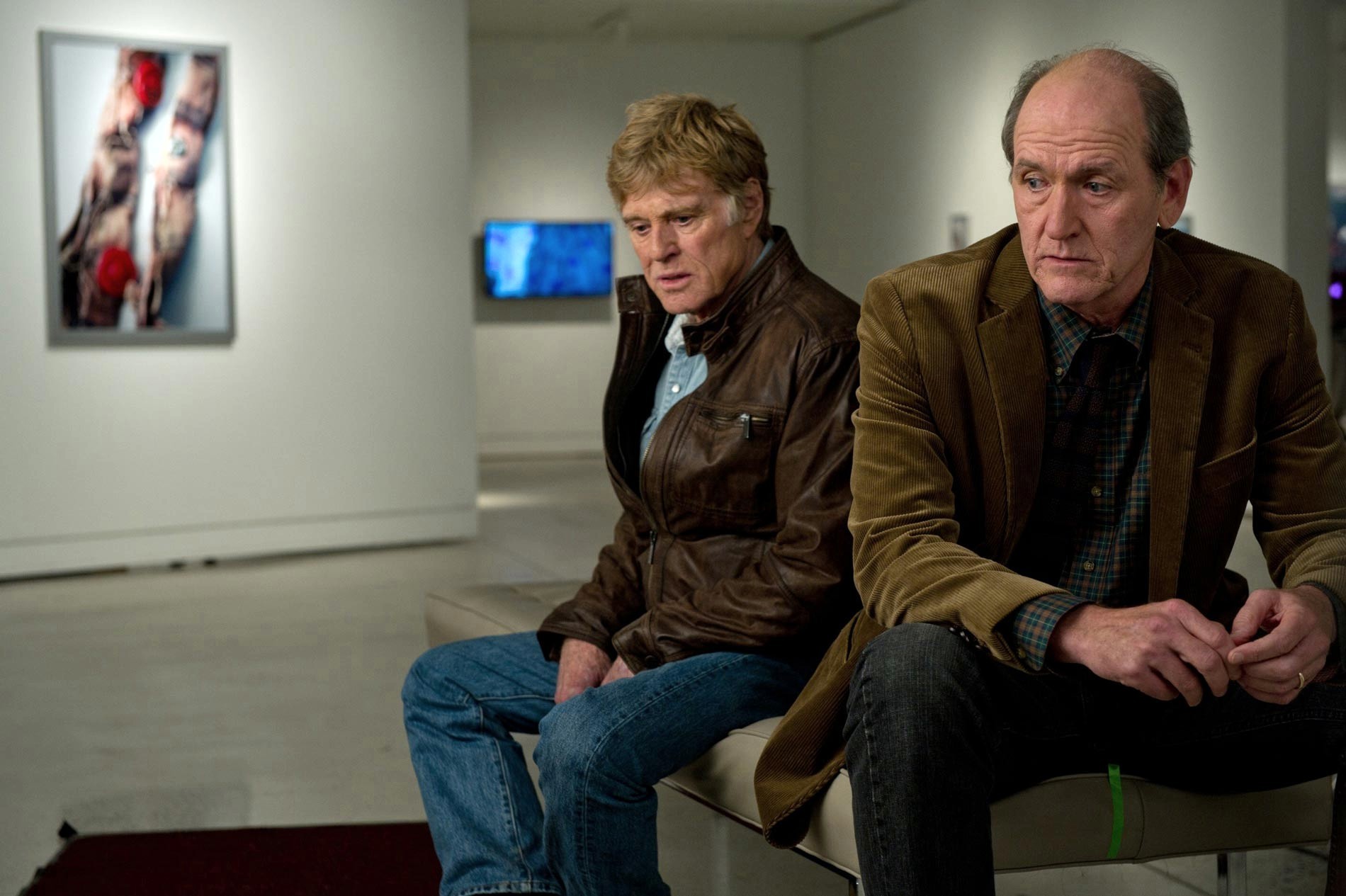
Director: Robert Redford
Runtime: 121 minutes
When a film comes front-loaded with stars, red flags start to go up. While it's impressive to see films that can string together stacked ensembles, there are always some immediate questions that arise. The big one is whether the film will give each member of the cast moments to shine, or if some of the stars have been cast in thankless roles strictly for their name value. While Robert Redford's The Company You Keep may not exactly be a great film, it can pride itself on being the rare example that manages to juggle a large, first-rate ensemble without dropping too many balls along the way.
Adapted from Neil Gordon's novel, Redford's latest directorial effort opens with the arrest of Sharon Solarz (Susan Sarandon) in upstate New York. A former member of the Weathermen (specifically, its radical militant arm), she's arrested for a crime that took place 30 years prior. Solarz doesn't resist, and goes along with as if it's exactly what she wanted. Yet Solarz's willingness to be caught creates a domino effect that starts to affect the lives of her former comrades. Local journalist Ben Shepard (Shia LaBeouf), who catches on to the story, eventually outs former Weathermen member Nick Sloan (Redford), who has been living under the alias of Jim Grant for decades. Sloan realizes that, with the FBI now putting extra effort into finding other members of the Weathermen, he'll need to abandon his life to set an old mistake right, and clear his name.
And once the chase begins (both Shepard and the FBI), The Company You Keep starts to trot out its cavalcade of stars with smart efficiency. Sloan's contacts across the film are all more than plot devices. Each one manages to bring up a different facet of the Weathermen's lost ideologies, as well as Sloan's relationship to those ideologies, without becoming episodic. These scenes are nicely broken up with jumps to Shepard's parallel investigation, as well as a handful of looks at the FBI team trying to catch Sloan and his contacts.
Though earlier detours are simpler (those involving Nick Nolte and Chris Cooper are closest to being strictly plot-oriented), the later encounters deepen the humanity of the chase. Richard Jenkins and Julie Christie (especially the latter) deliver poignant work as two very different kinds of former radicals. Jenkins' Jed is now a college professor, while Christie's Mimi is still boiling with radical fervor under the surface. Sarandon is also compelling in her fleeting screen time. As the woman who helps set off the plot, she's tasked with communicating years of confusion, regret, and broken idealism, and she does so marvelously.
For much of the story, Redford is more of sounding board onto which the ensemble reminisces. Thankfully, his work behind the camera more than compensates for his largely bland role in front. We may be watching a man run from a 30 year old crime, but Redford's direction captures the cat-and-mouse game as if his crime had taken place in the first scene. The suspense is never overbearing, and is allowed to play out with a mature naturalism that helps define the film.
Yet if the film is a strong showcase for its older cast members, the younger cast members get less satisfying material. Like Redford, LaBeouf doesn't have too much to work with, although his character traits are established much sooner and with greater clarity. Anna Kendrick, perhaps the ensemble's only truly wasted member, has even less as Shepard's FBI contact. The script tries to throw in a half-baked aside about the pair's former relationship, but it feels more like filler. Rising star Brit Marling fares better, and injects some spark into a similarly bland role, yet she's ultimately saddled with a subplot that is more intriguing on paper than in execution.
Though The Company You Keep handles its plot threads and the majority of its characters with skill, it comes across as a rather shallow piece. The engagement with the characters' ideas feels simplistic, even though the actors handle their dialogue well. While it marks a big step in the right direction for Redford from 2007's atrocious Lions for Lambs, the film is more concerned with being a thriller than a study of ideas, actions, and their implications. This makes it entertaining, but it also saps it of some dramatic power along the way. After moving along so smoothly for most of its runtime, the script shoe-horns in a little speech from Sloan meant to condense a bunch of ideas about journalistic integrity and personal growth into less than a minute. It has all of the subtlety of a hammer to the face.
Though The Company You Keep never fully sinks, it is weighed down by its surface-oriented screenplay and a shrug-inducing ending. Overall, it's an engaging, well-made piece of entertainment, yet it also thinks that by merely touching on important ideas and history, it suddenly becomes weighty and meaningful. The real result is that the film just feels overly confident, without the goods to back up that confidence.
Grade: C+
Director: Thomas Vinterberg
Runtime: 115 minutes
Sometimes it's the smallest lies that carry the biggest repercussions, for both individuals and their communities. That's certainly the case with The Hunt, Thomas Vinterberg's drama about multitude of ways that an innocent mistake can result in emotional devastation. Winner of the Best Actor prize at last year's Cannes Film Festival, The Hunt is a sturdy cautionary tale, bolstered by effective performances and level-headed direction. Yet it's also a largely plain film. What ends up being more noticeable is the reserved treatment of the raw subject matter, rather than the characters and their somewhat meandering story.
Set in a small Danish town, The Hunt begins with scenes of life in harmony. Lucas (Mads Mikkelsen), is a teacher at the local school. And while Mikkelsen's snake-like features are often used to unnerve viewers, the actor is able to create a believable portrait of a man loved by his community and his students (most of whom are very young). In addition to being popular at his job, Lucas is also part of a group of men in the town who go on annual hunts in the nearby forrest. With the exception of some troubles involving his ex-wife and the custody of his son Marcus, Lucas' life is in a great place. Unfortunately, seeing as that wouldn't make for an interesting story, one of Lucas' young students (Annika Wedderkopp) accuses Lucas of sexual abuse. Despite the girl's oft-mentioned colorful imagination, repeated conversations lead officials at the school to believe that her story is legitimate.
The intro and first accusations take up roughly 40 minutes of the story, yet Vinterberg is in no hurry to get the ball rolling. This proves to be both good and bad. On one hand, it gives The Hunt room to explore the ways in which the town ostracizes Lucas. At first it starts with a temporary suspension and the (admittedly understandable) anger from the student's parents. Yet as they investigation is dragged on, things escalate, and soon Lucas is banned from the local grocery shop. Even when Marcus comes to stay with Lucas for Christmas, Lucas' life continues its downward slide. On one level, it's frustrating to never get a better sense of the investigation, which ads up to barely more than two scenes after the accusation. Yet what this offers the film is a chance to examine the way different parties in town react, acting on an accusation that has no evidence behind it. Though Lucas is the center of the story, other members of the town are never painted in broad strokes (on the other hand, they aren't terribly detailed either).
The downside, however, is that there are stretches in the main stretch of The Hunt that lack true focus. Many individual scenes are strong, and none betray the overall tone. The problem is that Vinterberg and co-writer Tobias Lindholm haven't quite struck the right balance. The film occasionally darts off to other characters as if to suggest that the script intends to examine the town as a whole, rather than just Lucas. Yet it never really follows through on either promise. Mikkelsen, to his credit, is quite strong (as is the whole ensemble), and holds the film together. The character may be something of a victim, but neither Mikkelsen nor Vinterberg go for easy, saintlike characterization. A scene set in the town church, which could have proved overbearing in its thematic importance, is riveting because of its gradual build and lack of false histrionics.
Yet even as individual scenes (and Mikkelsen) impress, The Hunt is ultimately less than the sum of its parts. The basic premise and subject matter are rich with potential, yet Vinterberg takes a safe (albeit mature) approach. As a result, the film can drag at times, which isn't helped by the narrative structure (split over several months, and then jumping to a year later). There's nothing that sticks out as bad, yet as a whole The Hunt never comes together in a way that makes it stand out (aside from some truly stunning shots of the forests . Though the film ends on a high note with a chilling final scene (one that brings the thematic arc full-circle), there's not enough that precedes it to make the whole thing any more than competent and ordinary.
Grade: C+
Director: Francois Ozon
Runtime: 105 minutes
Despite functioning as a domestic thriller, there's something refreshing about the relative lightness of Francois Ozon's In the House. Recent acclaimed foreign imports have tended towards the heavier side. This February, Michael Haneke's Amour won the Foreign Language Film Oscar, and was preceded by Asghar Farhadi's A Separation. Both are excellent films, but they also take painfully honest looks at heavy subject matter. By contrast, In the House stands as a fun reminder that foreign imports need not all be emotionally exhausting in their excellence.
Opening at the start of the school year at a French high school, In the House quickly introduces us to bored literature professor Germain (Fabrice Luchini). As his colleagues cheer an initiative to introduce uniforms to the school, Germain can only look on with reserved disdain. His sophomore class does little to inspire him either, regaling him with writing assignments detailing weekend events like eating pizza and losing a cell phone. Yet as Germain reads some of his papers aloud to his art curator wife Jeanne (Kristin Scott Thomas), he stumbles upon the work of Claude Garcia (Ernst Umhauer). Not only does Claude's story show actual effort, but it ends with a teasing "to be continued..." His interest piqued, Germain decides to help the quiet young man as he continues his observations, even as the lines between fiction and reality begin to blur.
Claude's observations center on his classmate Rapha Artole (Bastien Ughetto), and his parents Rapha Sr. (Denis Menochet) and Esther (Emmanuelle Seigner). Though he refers to them as "the perfect family," Claude's journals are quick to either gently mock the Artoles, or snidely point out the cracks in their facade. Rapha Sr. is struggling with problems at work, while Esther feels trapped as a housewife, constantly musing about everything from a grander home to abandoned career aspirations. Nearly all of this is relayed through extensive sequences that show us Claude's interactions with the Artoles, while Germain's dry voice over gives us the specifics of Claude's writing.
And as much as In the House relies on simultaneously showing and telling its audience information, Ozon's screenplay never becomes bogged down with exposition. Loosely adapted from Juan Mayorga's play, Ozon's writing is infused with smart efficiency and an understated sense of black humor. For all of the film's satirical examinations of middle class life (Rapha's family and Germain's home alike), Ozon resists the temptation to become smug with his observations. Many similarly themed films sink themselves by trying too hard to be clever, both in plotting and in dialogue. In the House, under Ozon's assured direction, never has to strain to accomplish its goals, and glides along with ease.
Just as assured is the work from the ensemble, which is filled with both returning Ozon players and new talent. At the head of the story is Luchini, who infuses all of his scenes with a quiet mix of sarcasm and desperation. It creates the feeling that, at any given moment, In the House could snap from satire to tragedy, and vice versa. Though Germain is ultimately the observer in the story, Luchini never allows the role to become purely passive. His obsession with guiding Claude's writing is the driving force behind the narrative, much to the film's benefit. Then there's newcomer Umhauer, who has the film's trickiest role, yet never creates a false moment. Umhauer's sly, even lustful, gazes could have been over-the-top, yet the young actor never turns Claude into a caricatured devil child. This is most evident in the film's last act, when Claude's control over Germain is broken, and the consequences of his actions emerge.
Backing the leading duo up are a string of solid turns, namely Scott Thomas' increasingly flustered Jeanne. Like several of the roles in In the House, Jeanne could have been turned into an over-the-top cartoon. Thankfully, Ozon and Scott Thomas stay comfortably in line with the film's tone, and turn Jeanne into an engaging foil for Germain. At times, you almost wish that the film would focus entirely on their relationship. And, though their characters are practically pawns for Claude, Seigner, Menochet, and Ughetto infuse the Artoles with a humanity that makes them more than the butt of Claude's writing.
At the head of it all is Mr. Ozon, whose direction has a controlled and refined maturity that has clearly been the result of his last few films. Though still playful, the director has come a long way since lighter delights like the murder-mystery musical 8 Women. The characters here are more rounded, and treated more seriously. Even though the script doesn't directly engage with some of the characters' underlying conflicts (Claude's injured father, Germain's failed writing career), the interactions efficiently establish these people as more than pawns for Ozon to toy with. In the House does not aim for full-blown Greek tragedy in its later and darker scenes, but the (slightly rushed) last act does have genuine emotion coursing through its veins. Ozon may handle the emotions with a deft, light touch, but that doesn't mean that he doesn't take them seriously.
Likewise, the film's musings on storytelling, specifically the relationship between creator and spectator, are handled briskly. In addition to his marvelous writing and control of tone, Ozon deserves to commended for his energetic (yet never frenetic) and tight pacing. Credit should also go to the simple-but-natural cinematography and energetic score for propelling the story along so beautifully. There's little to no rush, and certainly no drag. Rather than wallow in Germain's boredom (only found in the opening scene or so), In the House establishes its protagonist's state of mind, and then plunges the viewer into its carefully escalating tale.
There's a seamlessness to the writing and directing that constantly keeps one on edge, without going overboard. The Ozon from a decade ago might have gone over-the-top in teasing the audience with the reality vs. fiction aspect of the story. Yet the new, more mature Ozon lets the story simply go along, uninterrupted by any sort of need to show off. Rather than display arrogance, the director has opted for a welcome slice of restrained confidence, both in himself and in his audience. That confidence is felt from the mundane opening, to the masterful final shot, one that cements In the House as one of 2013's best films, as well as one of the year's best surprises.
Grade: A-