Wednesday, August 17, 2011

Review: "The Guard"


A special sort of profanity runs in the family for brothers Martin and John McDonagh. Three years ago, Martin released his first feature film, In Bruges, which scored a Best Original Screenplay Oscar nomination, in addition to resurrecting Colin Farrell's career. That film, my favorite of 2008, played like a linear, European cousin to Pulp Fiction, with its lengthy, profanity-laced conversations that were somehow about everything and nothing simultaneously. Now, it's John's turn in the spot light. However, McDonagh's The Guard, despite nice work from Brendan Gleeson and Don Cheadle, can't quite measure up to his brother's debut feature.

Set in a small Irish town, The Guard focuses on Sgt. Gerry Boyle (Gleeson), an unorthodox police officer who is assigned to work with FBI agent Wendell Everett (Cheadle). Together (and apart), the pair try to uncover the reason behind a cop's death, while figuring out the incident's connection to a trio of drug dealers (Liam Cunningham, Mark Strong, and David Wilmot). At its core, The Guard is essentially a buddy cop movie, although it doesn't give Gleeson and Cheadle as much screen time together as you might expect. It's just one of several aspects that holds back McDonagh's film from reaching its full potential.

Now, to be clear, there was no need for McDonagh to strive to make In Bruges Version 2.0., but it's difficult to avoid the comparisons because of the similar style (not to mention the family connection). Like In Bruges, many scenes involve rambling discussions that cover territory such as religion, sex, and race. But even though The Guard has a handful of shining moments, these conversations lack the pacing and escalation of those found in similar works. The exchanges that are clearly meant to be the absolute highlights of a particular discussion rarely inspire more that a solid 'ha!' which is disappointing because the film is clearly meant to be a comedy, despite several deaths. Gleeson and Cheadle are clearly game, and have good chemistry, but the script doesn't utilize the pair's compatibility at all. Had the film been balanced with weightier moments (there's one, but it doesn't register much), I could understand the less energetic writing style, but instead The Guard comes off as a pleasant, albeit lazy crime story.

Even the film's central question (whether Sgt. Boyle is brilliant or an idiot) fails to create much that's compelling or entertaining. And when Cheadle isn't sharing the screen with Gleeson, his role becomes reduced to a one-note joke: an American outsider who completely fails at connecting with his Irish surroundings. Sometimes the execution of the joke works (Everett resorts to talking to a horse while canvassing a largely Gaelic-speaking neighborhood), and other times it comes off as limp, as though McDonagh was directing while simultaneously participating in a conference call. Even the spaghetti western-influenced score fails to liven up the proceedings, though it sure tries its hardest.

To be clear, though, The Guard is not a terrible film. It's just a disappointment considering the people involved, not to mention the generally positive word of mouth. I wish I could say that McDonagh's film was at least a piece of entertaining Irish fluff, but it barely qualifies as that; I'd have a hard time recommending it as a 'must see' or rental to even the biggest In Bruges fan. Instead, it's an extremely minor piece of film making that wastes the potential of its leads with characters who aren't nearly as funny or engaging as the script would like us to believe. It's also evidence that while there certain ideas, traits, and themes that run through the McDonagh veins, the ability to execute is unfortunately not one of them.

Grade: C+

Tuesday, August 16, 2011

Third time's the charm: "Immortals" trailer #3


It certainly took them long enough, but the marketing team for Tarsem Singh's Immortals has finally created a halfway decent trailer for the upcoming mythology epic. Many of the scenes and shots have been shown before, but there are just a few flashes of new footage that show the detail of Tarsem's vision. The massive CGI landscapes may be uninspiring, but the smaller sets and costume design are actually starting to pop out from all of the gold and brown flooded images. If I have to make one complaint, though, it's the accents. I know that the 'use British accents for everything foreign that isn't continental European' rule has been around for a long time, but having the ancient Greeks sounding like good old English lads is going to be a distraction. Granted, I doubt this will come close to topping the unbearable awkwardness of the British, Irish, and Russian (Transylvanian?) accents that pervaded Oliver Stone's Alexander (2004), but it's still something that could prove a distraction.

Thursday, August 11, 2011

[Short] Review(s): "Rise of the Planet of the Apes," "The Help," "The Devil's Double," & "30 Minutes or Less"

Rise of the Planet of the Apes dir. Rupert Wyatt: You'd think that a franchise like Planet of the Apes was long past its expiration date. Despite the original's status as something of a science fiction classic, the subsequent films seemed all-too-eager to jump down the rabbit hole into absurdity. If ever there was a series that needed to be retired from the silver screen (aside from Transformers), it was this one, right? Well, not exactly. The latest entry, a prequel/origin story, takes audiences back to where it all began, with surprisingly successful results.

Opening with a PETA approved scene that demonstrates the EVIL nature of man, we follow a captured primate who is taken to GenSys, an American drug company currently on the threshold of a cure for Alzheimer's. Here we get a rather cliched set up, involving two different men in the company. Will (James Franco) wants the cure to go through for science/humanity, while Steven (David Oyelowo), wants it to succeed for the money (guess which one gets his comeuppance by the time the film's 105 minute run time is up).

But even though there are plenty of obvious elements in the latest Apes flick, Rise does manage to create a mildly compelling story, never letting itself be overburdened by its we-know-where-this-is-going plot. The human characters may be plain, but thankfully, the film has a secret weapon: the ape Caesar, motion-captured/played by Andy Serkis of Lord of the Rings fame. The more that Rupert Wyatt's film focuses on Caesar, the stronger the story becomes. The ape's interactions may be near-wordless, but they resonate on deeper level, thanks to Serkis' excellent work and the outstanding visual effects work. In an age where so many movies are sunk by their over-reliance on VFX, Rise may be that rare film that benefits (and is saved by) the strength of its computer-captured/generated imagery.

Grade: B-


The Help
dir. Tate Taylor:
While this adaptation of Kathryn Stockett's best-seller may lack in terms of subtlety, it is, at its core, an effective piece of social-change cinema. Led by Emma Stone, the ensemble is filled with any number of strong performances from Viola Davis (the film's MVP), Octavia Spencer, Jessica Chastain, Allison Janney, Bryce Dallas Howard, and Sissy Spacek.

So even though it runs quite long, and resorts to quite a bit of 'telling,' the film does hit home in the right places, even though it takes longer than expected for the main plot to kick into gear. The Help may indeed be schmaltz at its core, but it never feels like it. There's no overbearing, sappy score or soundtrack, nor are there an overabundance of melodramatic scenes (it's actually laugh-out-loud funny in many places). And with such a talented ensemble to lead you through the story, smaller elements of the plot (like Stone's budding relationship with an oil rig worker played by Chris Lowell) don't seem like too much of a nuisance, even when they appear and then vanish from the rest of the film.

But perhaps its greatest strength may be that, while it's full of hopeful and uplifting moments of personal triumph, The Help never tries to overextend itself. The film's final scene, which took me by surprised when the credits started to roll, certainly holds the promise of tomorrow, but only after one character is confronted with a bitter dose of revenge courtesy of the story's antagonist. By keeping this balance in place, and by not pretending that its characters accomplished more than they did for the Civil Rights movement (it is a work of fiction, after all), The Help is able to simultaneously inform and entertain without shooting itself in the foot.

Grade: B


The Devil's Double
dir. Lee Tamahori:
It's not every day that an actor is given a chance to play dual roles on screen, so the opportunity has to be taken seriously (see: Nicholas Cage in Adaptation, Sam Rockwell in Moon, etc...). Now it's Dominic Cooper's (Mamma Mia!, An Education) turn to play the double game, in the form of Uday Hussein, and Latif Yahia, the man forced to become his double. But even though his efforts in the two roles (he's on screen as one or the other for almost the entire run time) are admirable, he's undermined by a script that isn't quite on the same level.

Latif's (admittedly incredible) story may be true, but director Lee Tamahori and screenwriter Michael Thomas seem more concerned with turning it into a modern day, Arabic Scarface (albeit with significantly less crazed shouting). In doing so, they've made the film consistently entertaining. The unfortunate by-product is that it renders the story a surface-only historical thriller. Cooper is certainly giving it his all as the increasingly frightening Uday, the trapped Latif, and as Latif pretending to be Uday. In many scenes the characters share the screen, and Cooper plays off of himself quite well. But despite his efforts, he can't quite overcome the shallow writing. Cooper is rarely given much to work with other than "be wary and uncertain," and "be a murdering/raping pyscho"; the roles are played well, yes, but there's absolutely no depth for Cooper to work with as an actor.

This is not to say that the film doesn't tell a compelling story. That much it accomplishes. The problem is, especially considering the story's real-life origins, that The Devil's Double never makes any attempt to go deeper with the material at hand. Thomas' script plays it safe, and keeps the story simple, never raising any larger questions outside of "what comes next for Latif?" So even though Cooper may be working his hardest, The Devil's Double winds up being something of a missed opportunity, as enjoyable as it is.

Grade: B-


30 Minutes or Less dir. Ruben Fleischer: The idea of Jesse Eisenberg reteaming with Ruben Fleischer was definitely appealing on paper. The pair first worked together on Zombieland, one of the great hidden gems of 2009. Sadly, lightning hasn't struck twice for these two. 30 Minutes or Less isn't a terrible movie, but it is vastly inferior to the duo's last collaboration, and barely even memorable.

Based loosely on real events, the film centers around Nick (Eisenberg) a slacker pizza delivery boy who gets roped into a scheme by two idiot criminals (Danny McBride and Nick Swardson). With a bomb strapped to his chest, Nick is given nine hours to rob a bank, lest he be blown to smithereens by his captors. What follows is an appropriately crazy story, filled with car chases, stand-offs, and yes, a bank robbery. Some of the banter (between McBride and Swardson or Eisenberg and Aziz Ansari) is entertaining, and occaisionally worth a good laugh. The problem, though, is that the characters are underwritten from the start, and given the plot, never have time to develop. That Nick is something of a jackass during the first act doesn't help matters.

Fleischer certainly hasn't lost his flair for fun, at the very least. The car chase is well staged and shot, and a scene involving McBride's father creeping through his own home to find and intruder is surprisingly effective in creating some low-key tension. Michael Pena also gets a few laughs as a crazy hit man with a bizarre accent. Other characters, however, aren't so effective. A prostitute who leads McBride to Pena is a complete throwaway, while Dilshad Vansaria (as Ansari's sister) is there strictly to function as a plot device. They feel like flab, which is distracting considering the film's short run time (83 mins). So even though Fleischer's latest is pleasant enough to sit through, it's also proof that less doesn't always mean more.

Grade: C+/C

Sunday, August 7, 2011

Trailer: "We Need to Talk About Kevin"


We Need to Talk About Kevin Bande-annonce by toutlecine

One of my most anticipated of the year, if for its leading lady alone, is Lynne Ramsay's We Need to Talk About Kevin, based on Lionel Shriver's novel of the same name. While the subject matter may be, er, unpleasant (troubled kid goes on Columbine-esque rampage), the cast's credentials are certainly a draw. The film also picked up very strong reviews at Cannes, and the film's US release of December 2nd (limited) indicates that its distributors plan on pushing this one for the Oscar race. Swinton has yet to receive a second nomination since her first, for which she won, in 2007. She's been passed up completely for two recent acclaimed performances (Julia and I am Love), but this could be her chance to return to the Oscars as a nominee, which feels long overdue, considering the excellent work she's done both before and after her surprise Oscar triumph 4 years ago.

Wednesday, August 3, 2011

The Month in Review: July 2011

Best Film (Theaters): Beginners
My favorite movie of last month, and currently one of my favorites of the year, is this charming gem from writer/director Mike Mills. In addition to juggling multiple story strands in a non-linear fashion, Mills also gets wonderful performances from his small cast, especially Ewan McGregor. Whatever it may lack in aesthetics (it's not really well shot, barring a few scenes), it easily makes up for in its sensitive direction, insightful writing, and strong acting, making Beginners one of the best films of the summer.


Best Film (DVD/Rental): Memories of Murder (2003)
I never had a chance to write anything about this excellent film from Mother director Joon-ho Bong, so I guess this is my chance. Set in 1986 (and reportedly based on real events), what starts as a simple enough police procedural evolves into a lengthy and compelling piece of cinema. And, in keeping with the best of Korean cinema, it mixes expertly designed scenes of high tension with oddball humor. As the murders pile up, and the signs begin to point to a serial killer, Bong's strangely elegant thriller only gets better. It's not built on elaborately staged killings or excessive gore, but rather on the way the case wears away at the men leading the investigation as time passes. That it's book-ended with a surprisingly subdued ending, rather than striving for a last minute twist, is simply icing on the cake.


Best Director: Jee-woon Kim - I Saw the Devil
His film may have all of the traits of any number of sleazy, exploitative thrillers, but I Saw the Devil is proof that graphic violence doesn't have to be meaningless dreck. From the jarring (albeit expected) opening kill, to the sickeningly poetic ending, I Saw the Devil is filled with gruesome images, yet under Jee-woon Kim's guidance, it all feels as though it has purpose in the actual story, which is quite fantastic.


Best Male Performance: Ewan McGregor - Beginners
McGregor is sometimes described as being an invisible actor, one who slips so seamlessly into his roles that it feels as though he's not acting that much at all. Let's hope Beginners can help shake that silly label. For even though McGregor's character is another sweet nice guy, the range that the actor displays is impressive, and it all rings true.


Best Female Performance: Olivia Colman - TyrannosaurIn reading this, I've discovered that I accidentally awarded this film in my Month in Review for June (for screenplay). However, now that I've found my mistake, I'm free to give this to one of my favorite performances of the year. Though better known in the UK for her comedy work, Colman's performance in Paddy Considine's directorial debut is a dramatic tour-de-force. The film's protagonist may be Peter Mullan, but when Colman lets loose in her big scene, it's damn near impossible to take your eyes off of her. Let's hope this hugely successful foray into drama is just the beginning.


Best Screenplay: Beginners by Mike Mills
A sensitive and finely attuned film needs a sensitive and finely attuned screenplay, and that's exactly what allowed Mike Mills' latest film to be such a success. Elegantly jumping around in time, his story of love and loss is filled with moments of hilarity and poignancy, and populated by a small group of lovingly rendered characters.


Best Ensemble Cast: Harry Potter and the Deathly Hallows Pt. 2
The final curtain call for the Potter series may not have given everyone a full good-bye (Jim Broadbent, Emma Thompson), but by and large, this hugely successful send-off works because it knows which characters to put in the spot light, even if it's only for a moment. Whether it's Neville taunting a horde of Death Eaters and killing Nagini, or Luna Lovegood yelling so loud that Harry stops and listens amid the chaos around him, The Deathly Hallows Pt. 2, showcases its massive cast to beautiful effect.


Best Cinematography: Eduardo Serra - Harry Potter and the Deathly Hallows Pt. 2
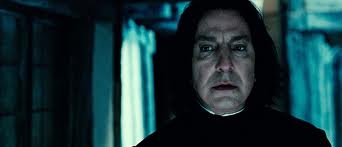
There have been great strides in the artistic design of the Potter films from The Sorcerer's Stone, but The Deathly Hallows Pt. 2 took it to another level, in large part thanks to Eduardo Serra's rich cinematography. Though often very dark, the images are stunningly lit, whether it's a scene full of chaos (the courtyard battle at Hogwarts) or the static, opening shot of Snape framed in a coffin-shaped window. The series went out with a bang, and Serra made sure to capture every frame beautifully.

[Short] Review: "Crazy, Stupid, Love"


There's plenty of love and craziness involved in Crazy, Stupid, Love, the latest from directors Glenn Ficarra and John Requa (I Love You, Phillip Morris). And, thankfully, there's also not much that's stupid, even though it awkwardly flirts with cliches in the last scene. Despite its plain set-up (ladies man helps divorced man get his mojo back), Crazy, Stupid, Love rises above the increasingly awful pack of romantic comedies hitting theaters by assembling a fantastic cast (led by Steve Carrell and Ryan Gosling). The script itself, while avoiding the obnoxious characters or plotting tedium so many other rom-coms, is not brilliant, or filled with non-stop laughs.

It is, however, filled with sincere charm, and enough funny moments thanks to the excellent ensemble (rounded out by Julianne Moore, Emma Stone, Kevin Bacon, and Marisa Tomei's perfectly timed laughs). Carrell finally gets to play a role that uses his likability, without resorting to any Michael Scott-isms, and Gosling exudes sexiness in spades, all while pulling off his character's snarky side with ease. The trio of women, each wildly different, all have their moments to shine as well, though it's a shame that Moore isn't given much to do comedy-wise aside from her excellent delivery on that Twlight joke. And even though it's a bit long for a romantic comedy, it doesn't feel nearly as drawn out as, say, a Judd Apatow comedy (*whew*). If it does need some trimming though, it's in a subplot involving Carrell and Moore's son (Jonah Bobo) and his crush on his babysitter (Analeigh Tipton). The adult relationships are handled so well, that inclusion of this plot thread feels like an extra. It's not that it isn't funny, it's just that it detracts from the stronger portions of the film, which are what make the movie such a pleasure to watch (including, but not limited to, Ryan Gosling's near-nudity in several scenes).

Grade: B/B-

Monday, August 1, 2011

Review: "Beginners"


Love takes many forms in Mike Mills' Beginners. The director's latest explores relationships between men and women, parents and children, and people and animals. Combine that with a time-jumping, non-linear narrative structure, and you have the ingredients for something completely contrived and scatter shot. However, Mills' film, his first feature since 2005's Thumbsucker, never feels out of balance. Instead, it's a sincere, honest, and touching film about different types of beginnings in life.

After a brief, near-silent intro, Mills' semi-autobiographical film begins with Oliver (Ewan McGregor) telling us that after his mother passed away, his father (Christopher Plummer) decided to come out. From there, the story jumps from Oliver dealing with his father's increasing immersion into the gay community (and subsequent relationship), his father's declining health, Oliver's relationship with his mother as a child, and Oliver's romance with Anna (Melanie Laurent).

All of these relationships, along with Oliver's bonding with his father's dog (is there an award for best performance by an animal?), are handled with an elegant simplicity, one that allows for moments of laugh out loud humor and heartfelt emotion. In drawing from his own experiences, Mills has created a story that, despite its unique details, rings true in its depictions of love and loss. McGregor is sweet and vulnerable as Oliver, a man dealing not only with a profound revelation, but also with his first good relationship in years. Plummer and Laurent, along with Mary Keller as Oliver's mother, turn in lovely supporting turns as well. Plummer and Keller, who never share the screen together, speak volumes as parents who struggle to connect with each other, while Laurent is quirky (but not overly so) and charming as Oliver's love interest. She's not reduced to a perfect object of male desire, as is often the case in similar films, and Mills' grounded writing for the role gives Laurent more room to perform, and for her chemistry with McGregor to blossom.

And as much territory as it covers over 100 minutes, Beginners never feels as though it's stretching itself thin. Mills utilizes each story thread elegantly, and the jumps between and among various points in time are simple and effective. By not following a straight-forward path, Mills is able to keep us up in the air as to what will come next, without undermining the film's most poignant moments, which are beautifully understated. Rather than strain for moments of heart or humor, Beginners unfolds with an ease that makes the proceedings feel effortless and lived-in. This is a film about beginners, but Mills and his cast prove themselves to be old pros, working together to create a beautifully emotional film, one that rises above its extremely indie look (and budget) to become something memorable, and something special.

Grade: B+